
BrowseRead
.A Chrome extension that helps readers explore what sits beyond an article, without leaving the page.
Design opportunity
News consumption is increasingly shaped by algorithmic feeds, social sharing, and self-selected sources.
The risk is not simply missing information, it is rarely being prompted to consider an alternative framing.
Reading an interesting article often created a second task.
Not understanding the piece itself, but following the questions it raised:
Is there another interpretation?
Which industries or companies could this affect?
Where can I go deeper than this article?
The existing user journey was fragmented: open tabs, search broadly, compare sources, lose the original context, and eventually stop exploring.
The opportunity was not to summarize the article. It was to reduce the friction between curiosity and research.
Curiosity starts after reading
Browse ethnic menu choices, ingredients, sauces, and food preparation
Learn to ask questions in restaurant terms to order allergy-free ethnic meals.
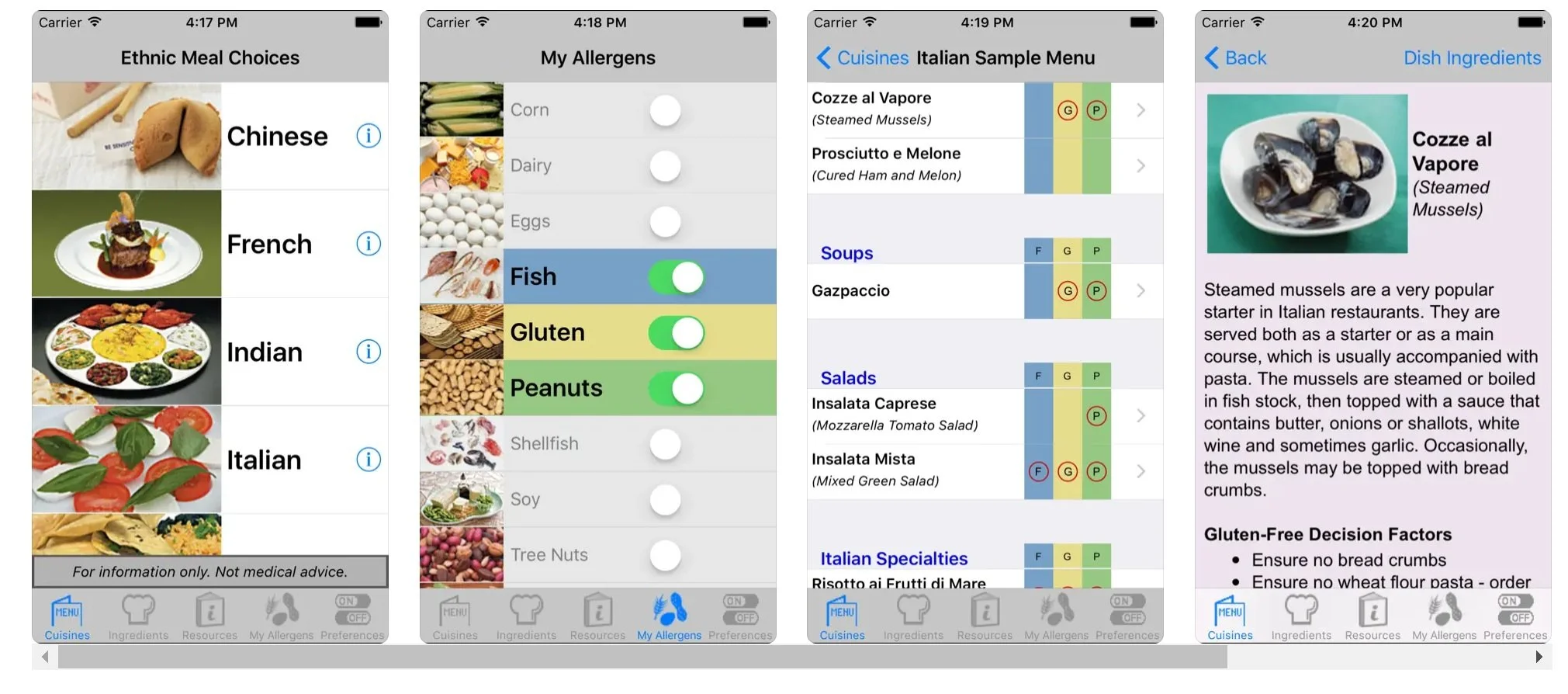
iEatOut Gluten Free & Allergy Free
Our lack of domain knowledge in dietary restrictions and restaurant operation meant we needed to understand the struggles that our target group are facing and the nature of restaurant service provision thoroughly and quickly.
Primary research
3 Interviews
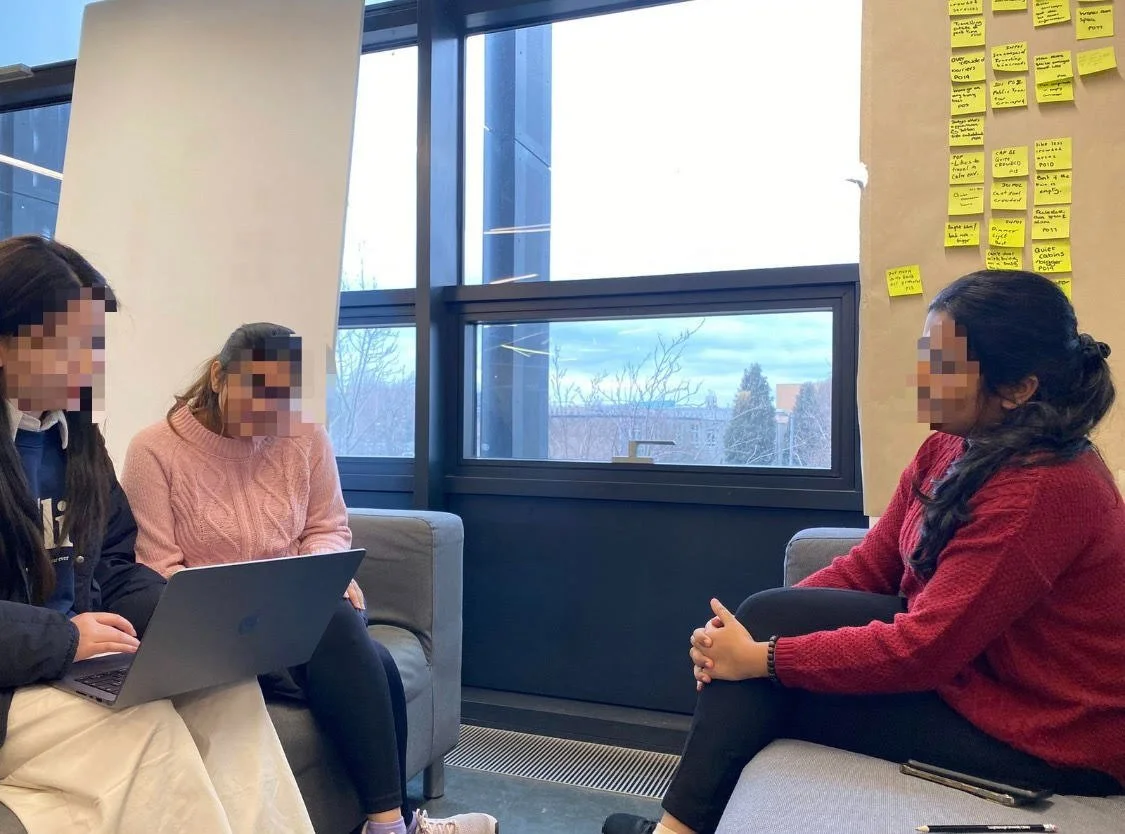
We interviewed 2 participants who have different food allergies, and 1 restaurant owner to understand how restaurant are currently coping with the needs of our target user group.
Autoethnogrpahy
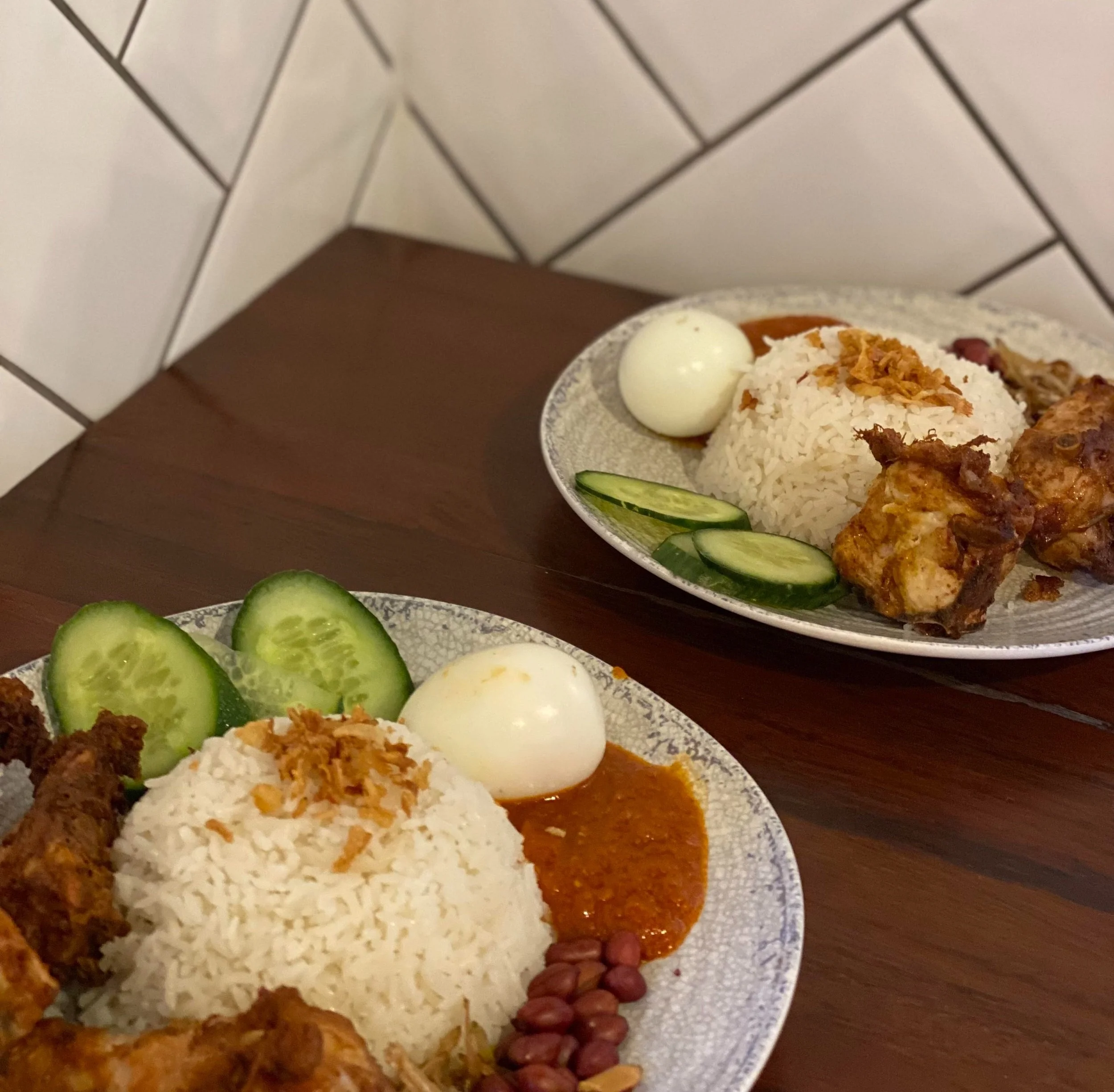
We also went to a restaurant and ‘assign’ everyone a food allergy to re-enact what people with dietary restrictions need to go through when dining out in a restaurant.
Problems
Based on the research, we have identified 3 primary problems we want to address.
Key Findings + Insights
01

People with food allergy will repeat their conditions to the waiter over and over again to minimise room for error

They spend time searching for restaurants that provide allergy-free options and often end up with little restaurant options

There’s a lack of reassurance for diners to make sure the meal is actually allergy free
Vision statement
It’s 2028, food allergic reactions have been eradicated in dining-out experiences throughout Loughborough.
Dining out has never been more inclusive.
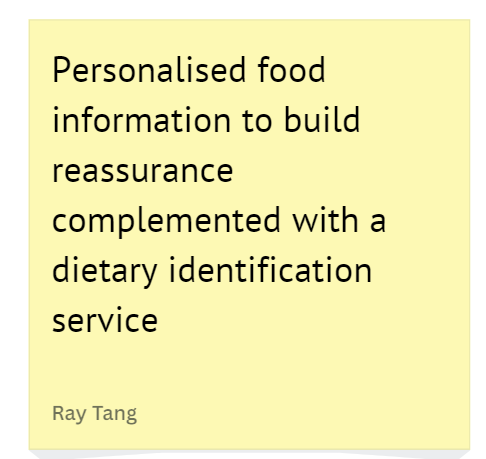
We built on the pain points we discovered and ideate with potential solution using What If’s statements. We narrowed down to 2 solutions and decided to went for Exploration #1 as it has higher average score on desirability, feasibility and viability.
Design exploration
Exploration #1
Exploration #2
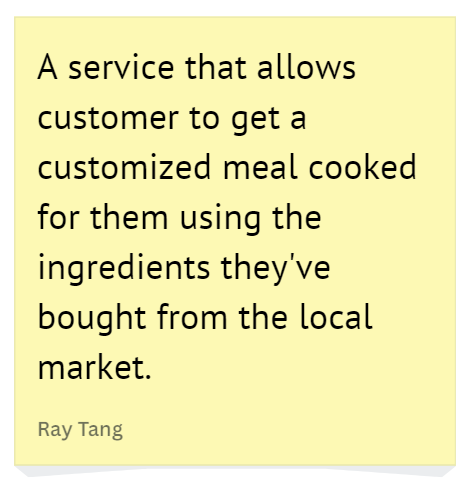
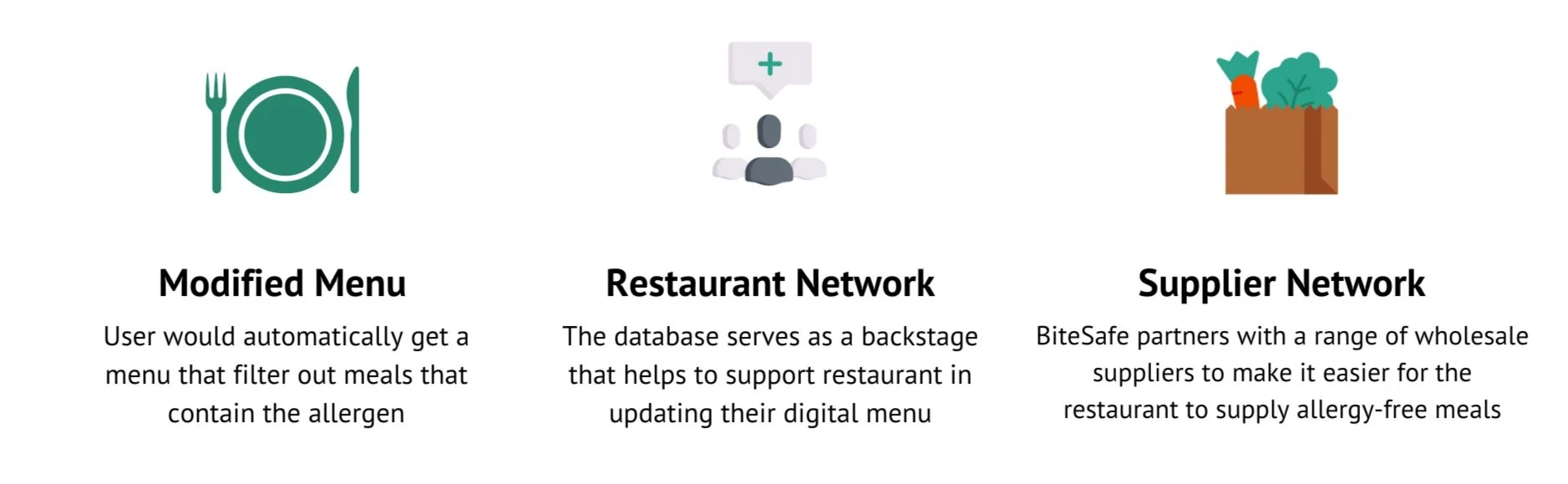
We used Crazy 8’s to ideate potential features for the service, then used MoSCoW analysis to identify frontend and backend features that are essential to address the pain point of our target users.
Initial MVP
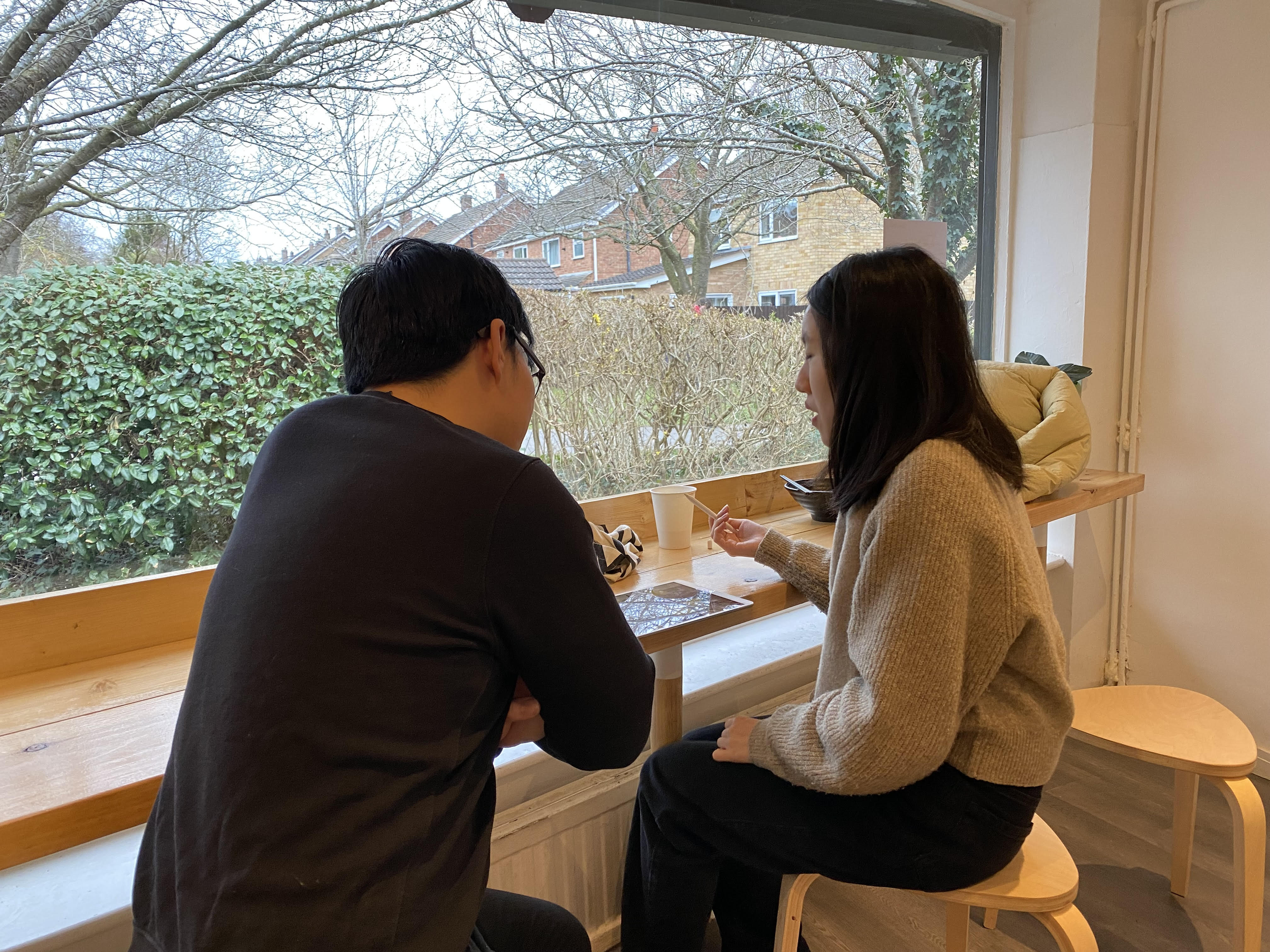
We walked through our service with potential users; (1) people with dietary restrictions, and (2) restaurant owner and received positive feedbacks from both sides.
But we also realise we need to strengthen the benefits that restaurants will get when using this service to improve the service’s stickiness.
User testing
Providing wholesale suppliers network will not help restaurant in providing more allergy-free meal options
Restaurant tend to have a fixed supplier and are reluctant to switch to another supplier
02
Restaurant find it troublesome to check sauce bottle to confirm what allergen it contains
If customers called and ask whether a certain dish contain a certain allergen, what restaurant currently do is to manually check each sauce bottle to confirm, which is very time-consuming and inefficient.
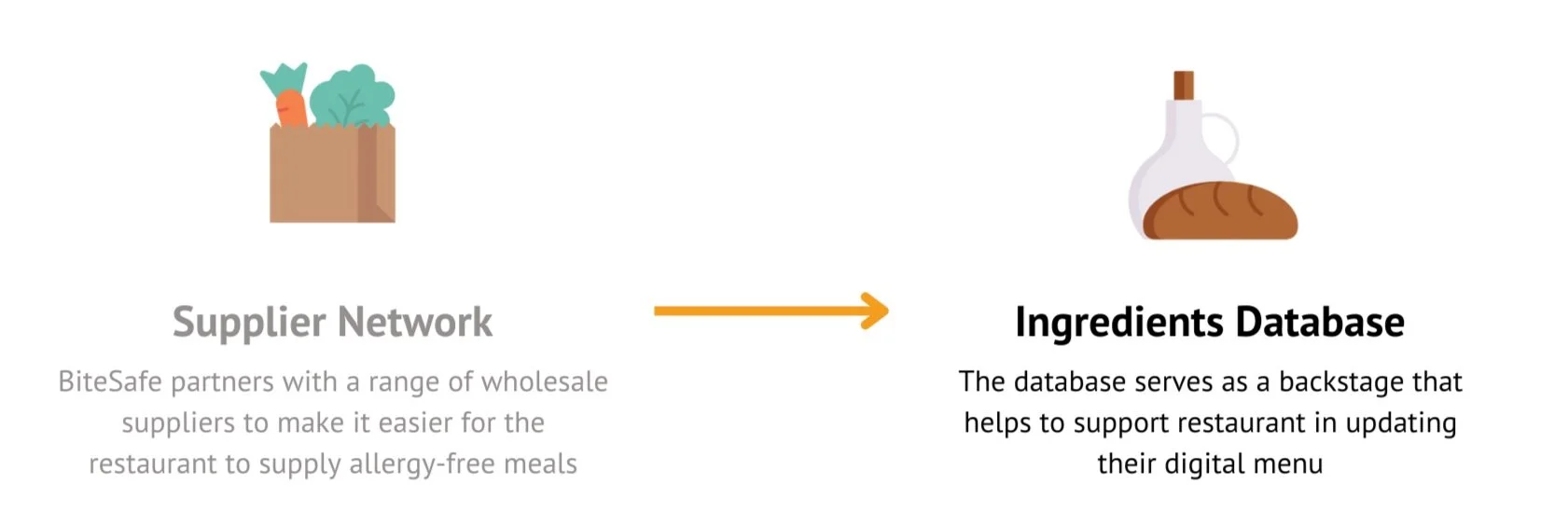
Based on the restaurant’s feedback, we decided to replace the supplier network with the ingredient database, which would better address restaurant's current pain point and would serve as a backstage for the service.
Pivot
App Journey
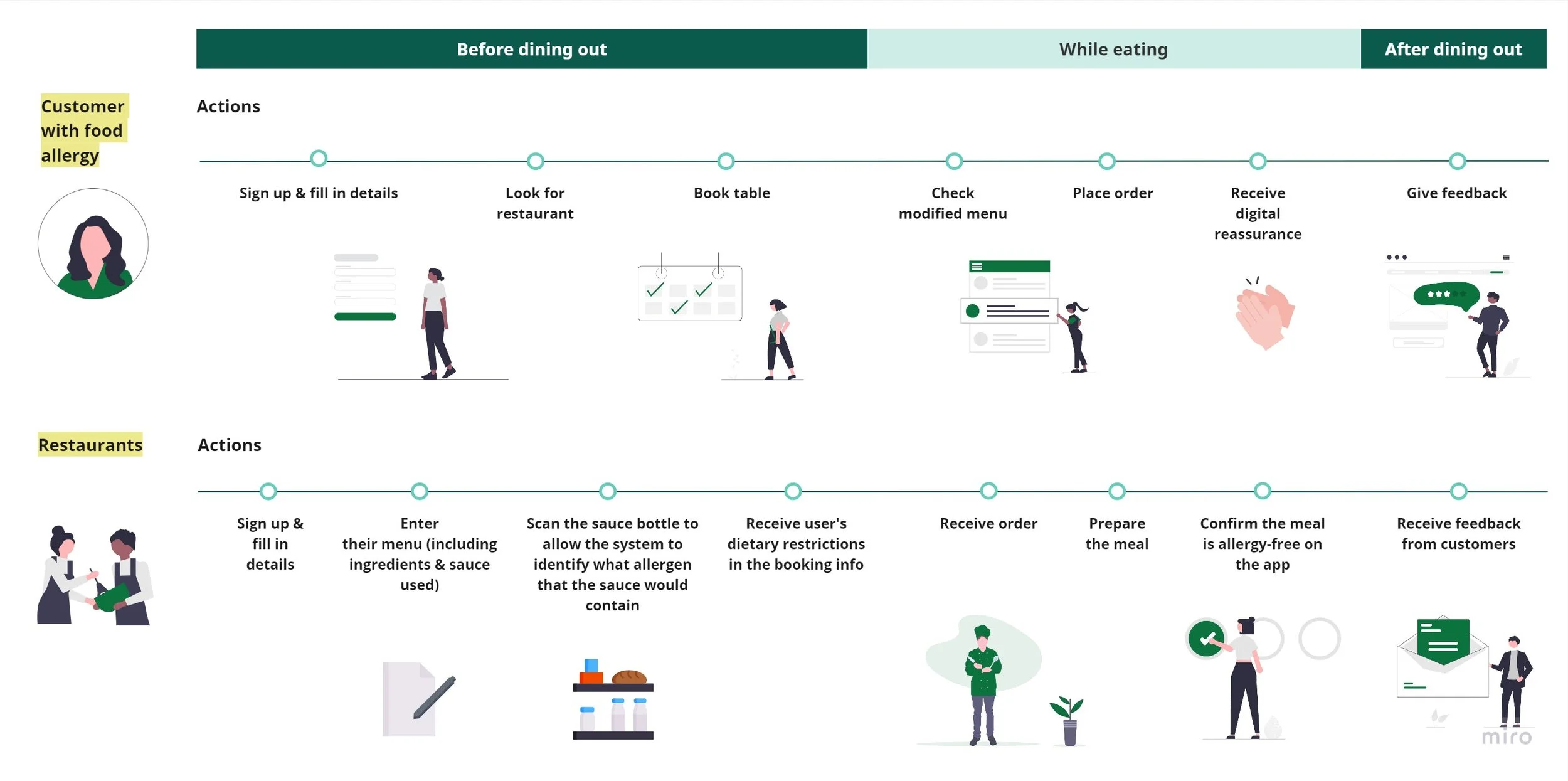
Here we mapped out how customers and restaurants would use our service respectively.